What the record shows
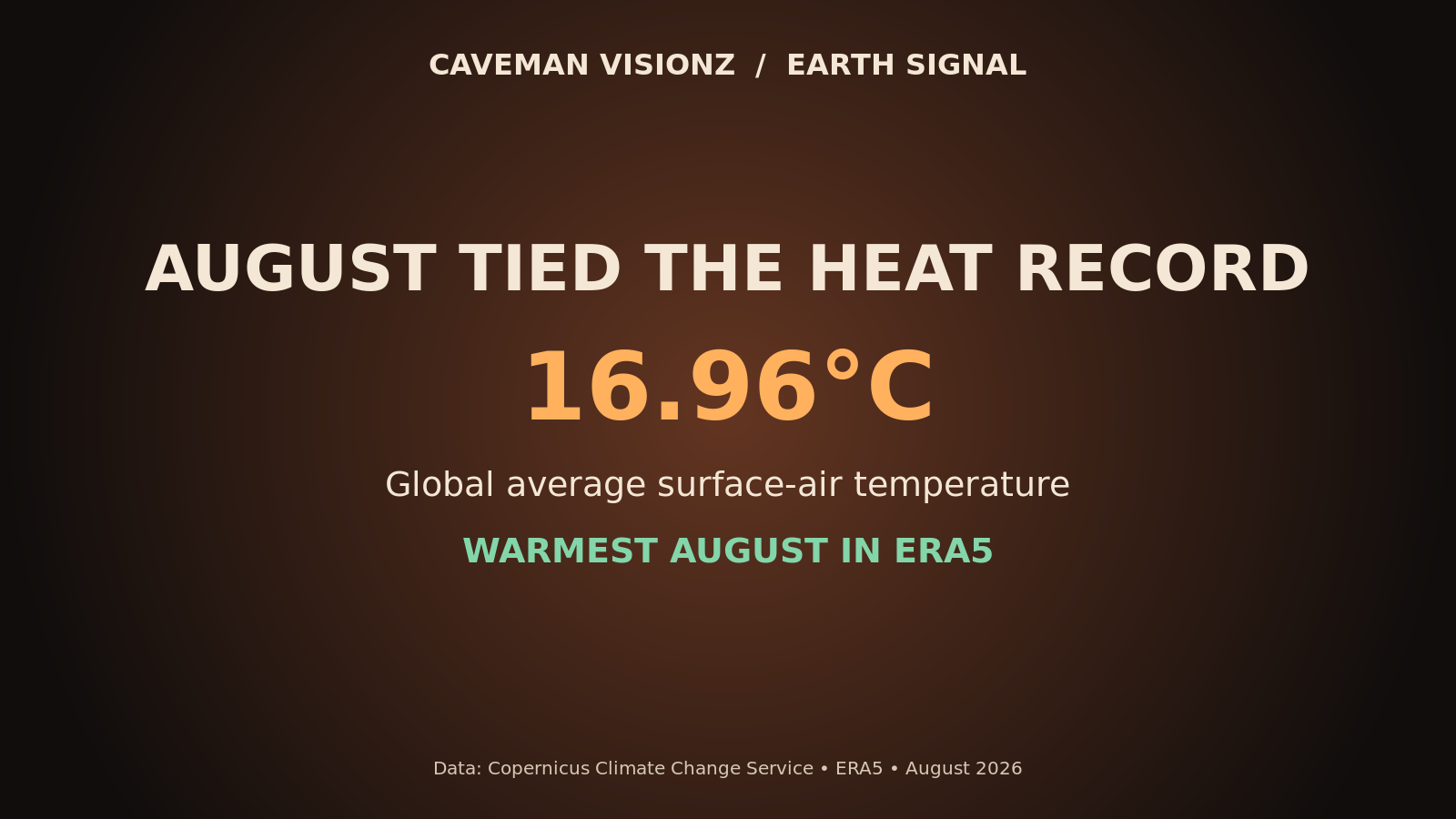
The Copernicus Climate Change Service reports a global average surface-air temperature of 16.96°C for August 2026. That was 0.85°C above the 1991–2020 August average and 1.65°C above the estimated 1850–1900 preindustrial level. August was the warmest August in the ERA5 dataset and tied July 2023 as the warmest calendar month in that record.
The ocean signal
Copernicus also reported unusually warm sea-surface temperatures outside the polar regions. Warm oceans can influence rainfall, storms, marine ecosystems, and the amount of heat held in the climate system.
Why it matters
A hotter global background raises the odds and potential severity of heat extremes and can affect health, crops, water supplies, infrastructure, and energy demand. Local conditions still vary: a global record does not mean every place was unusually hot.
Confirmed versus uncertain
Confirmed: August 2026 set the August record in Copernicus's ERA5 analysis and tied the highest monthly global average in that dataset. The 1.5°C Paris goal concerns sustained long-term warming, so one month above that level does not by itself mean the target has been permanently crossed. Different datasets and later revisions may produce small numerical differences.
Sources
Read the original material behind this signal.
Caveman Visionz provides general information and commentary, not individualized financial advice.