What was found
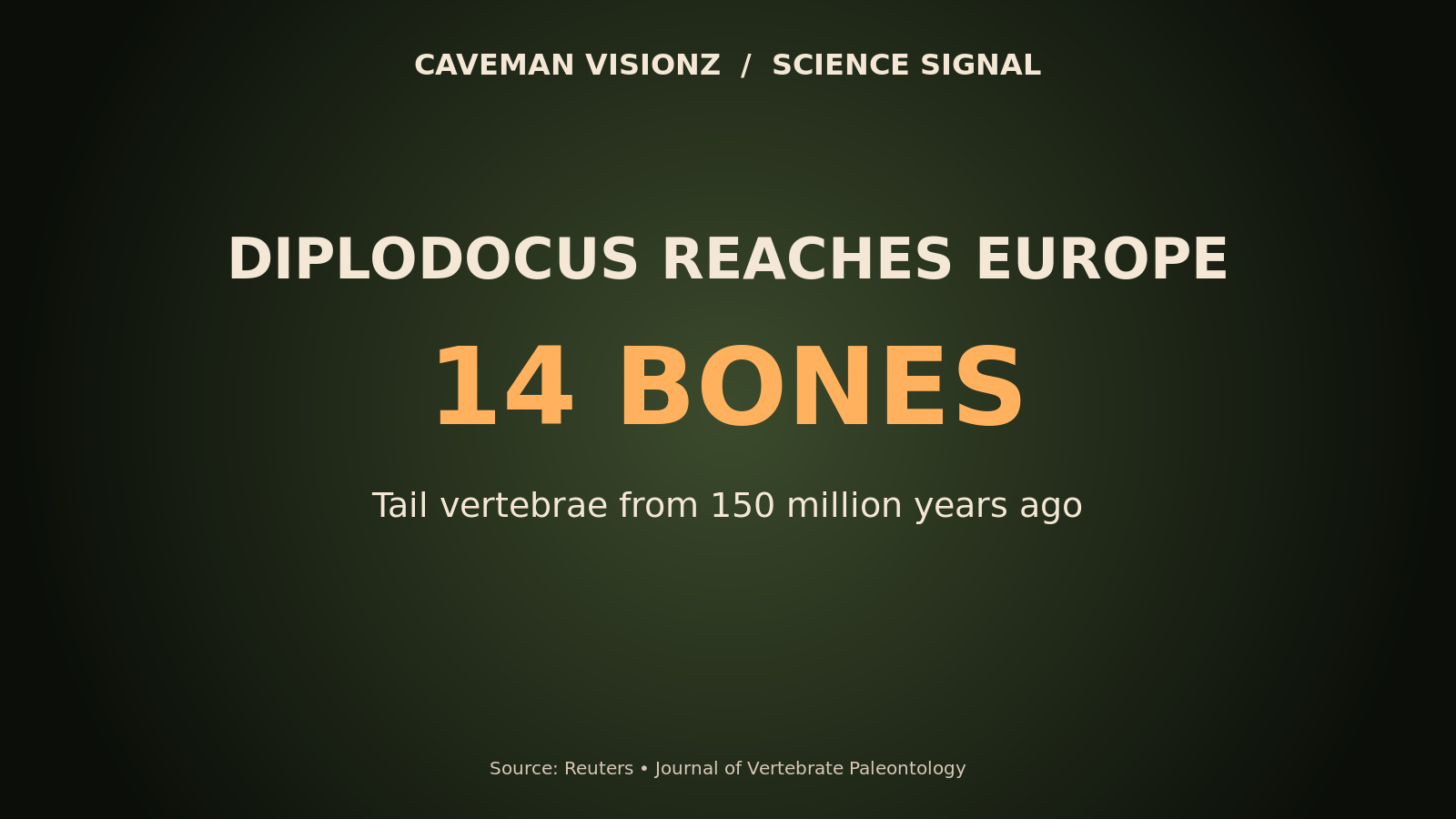
Paleontologists with the Dinópolis Foundation identified 14 tail vertebrae and several chevron bones from sediments about 150 million years old in Teruel, eastern Spain. The researchers assigned the specimen to the genus Diplodocus.
Why the identification matters
Diplodocus fossils had previously been known from North America. The Spanish specimen is the first evidence of the genus in Europe and one of the continent's more complete diplodocid finds. Researchers estimate the animal was roughly 25 meters, or 82 feet, long.
The larger Jurassic map
The find adds to evidence that large sauropods moved through or shared connected ecosystems across regions that are now separated by the Atlantic. It also strengthens Teruel's importance for understanding Europe's Late Jurassic dinosaurs.
Confirmed versus uncertain
Confirmed: the preserved bones were described in peer-reviewed research and identified as Diplodocus. Uncertain: one specimen cannot reveal how common the genus was in Europe, how long it remained there, or the precise route its ancestors used to reach the region.
Sources
Read the original material behind this signal.
Caveman Visionz provides general information and commentary, not individualized financial advice.