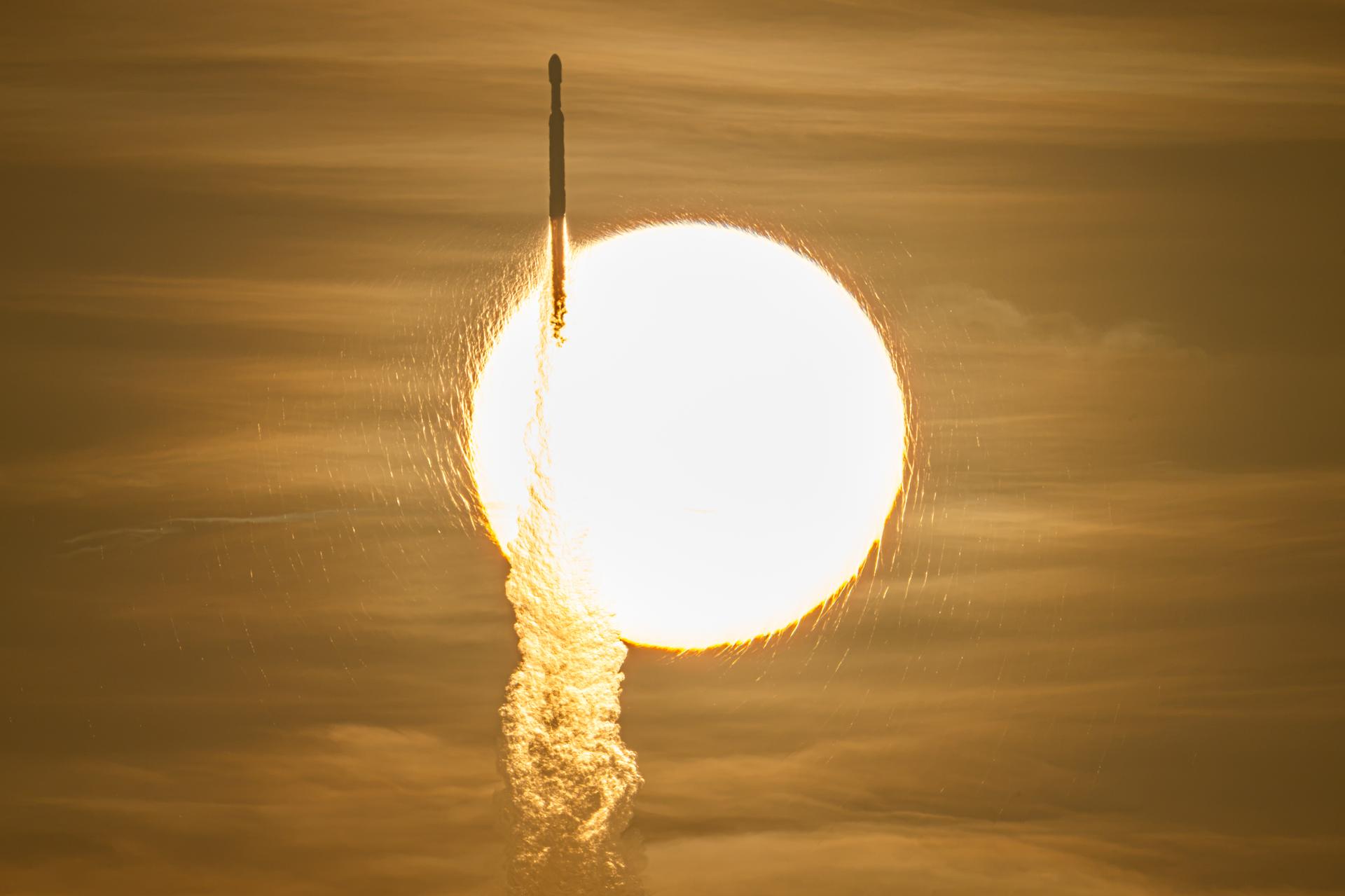
The launch and journey
NASA says Roman launched at 7:26 a.m. EDT on August 30 aboard a SpaceX Falcon Heavy from Kennedy Space Center. The observatory is traveling toward the second Sun-Earth Lagrange point, or L2, roughly one million miles from Earth. Ground controllers received telemetry after launch, and NASA confirmed deployment of the solar panels and lower instrument sunshade.
What Roman is built to study
Roman combines a wide field of view with infrared vision to investigate dark energy, dark matter, exoplanets, and many other questions. NASA says it is designed to survey the universe about 1,000 times faster than Hubble. Its Wide Field Instrument uses 18 4K detectors to produce 300-megapixel images.
A telescope that creates a data problem
NASA expects Roman to return about 1.4 terabytes of data per day—the highest data rate yet for a NASA astrophysics mission. Scientists plan to use machine learning, artificial intelligence, and citizen-science participation to identify promising discoveries in that stream.
What is confirmed—and what remains uncertain
Confirmed: Roman launched, established communications, and began its journey and commissioning period. NASA anticipates the first public images in early 2027. Uncertain: the observatory still must complete deployments, corrections, calibration, and testing. Its scientific discoveries cannot be known in advance.
Sources
Read the original material behind this signal.
Caveman Visionz provides general information and commentary, not individualized financial advice.